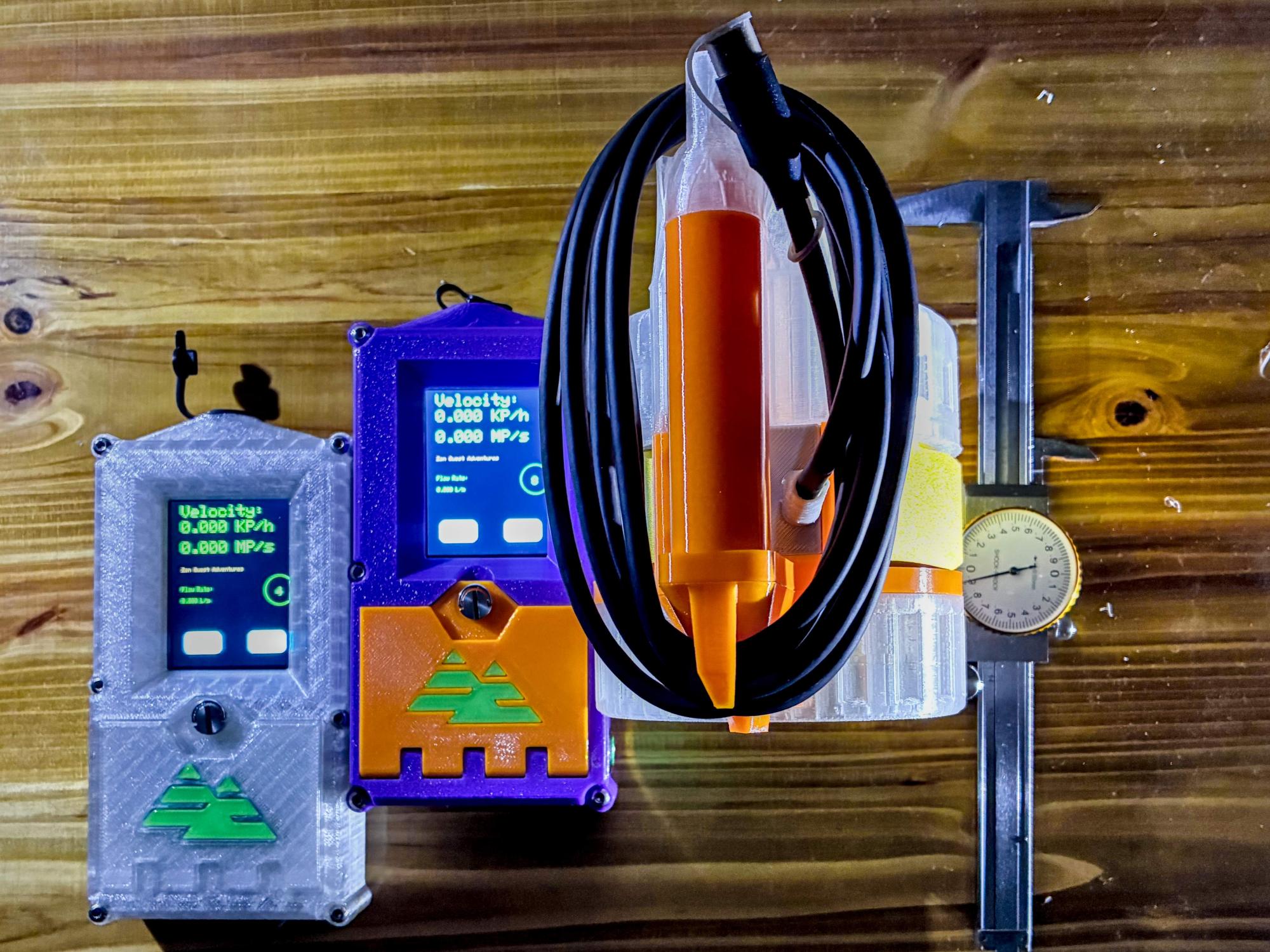
Open Fowmeter 2.0
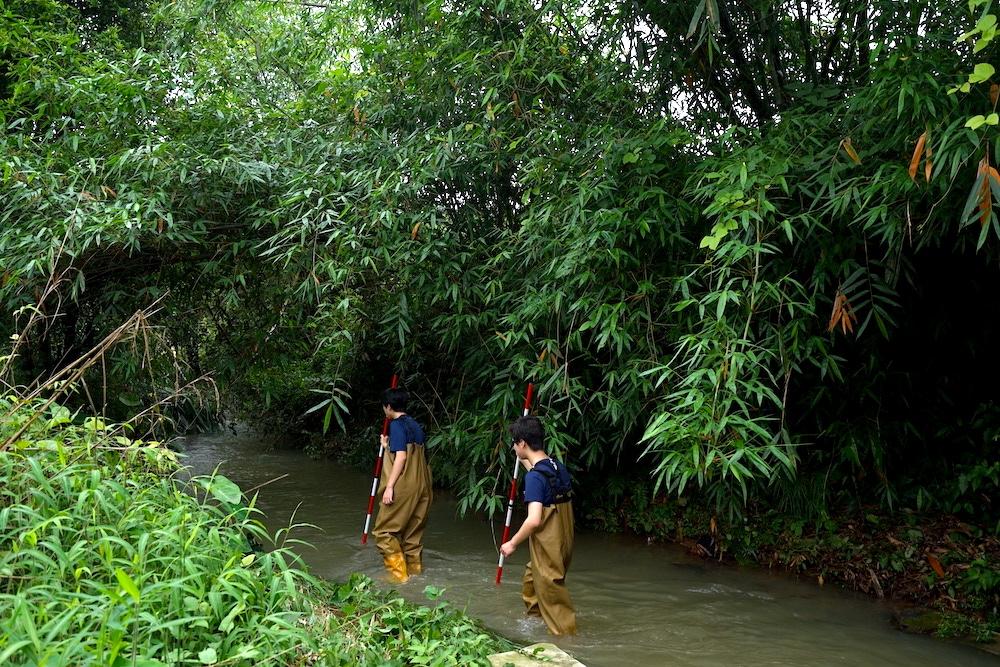
Geography River Studies, measuring velocity
Flowmeters are problematic, you can use a ball or an orange and time it moving between 2 known points, but you will get different results every time. You can buy an electronic flowmeter but these are expensive, they brake easily and the screen with battery case is not waterproof nor even in most cases weather resistant.
We have used these options with our study groups and always succeeded in collecting our data, However the expensive flowmeters always had problems and the orange was lacking repeatability. In 2018 Eben started work designing an open source flowmeter, it took lots of iterations and mistakes to finally make a working unit. The unit was released on our: https://gitlab.com/zenquest/fieldwork-flowmeter/-/tree/master/ and build instructions were added here: https://hackaday.io/project/176376-open-flow-meter where our project won the:

We also did extensive testing using velocimetry software to measure river flow rate with digital video. But this (for now at least) is to time consuming, complicated and error prone for our student groups to reliably collect data. So for the last 5 years or so we just kept using our v1 open flowmeter for our river study programs. However this unit had many issues, it did its job, it was cheep, easy to make, easy to fix but it often broke down, we needed many spares to finish every set of fieldwork, the cable had many problems and the display stopped working when it rained or was dropped in the river. The on off switch was delicate and could easily get switched on by accident when in a travel bag.
Our new v2 version fixes all these main issues and adds lots of extra features:
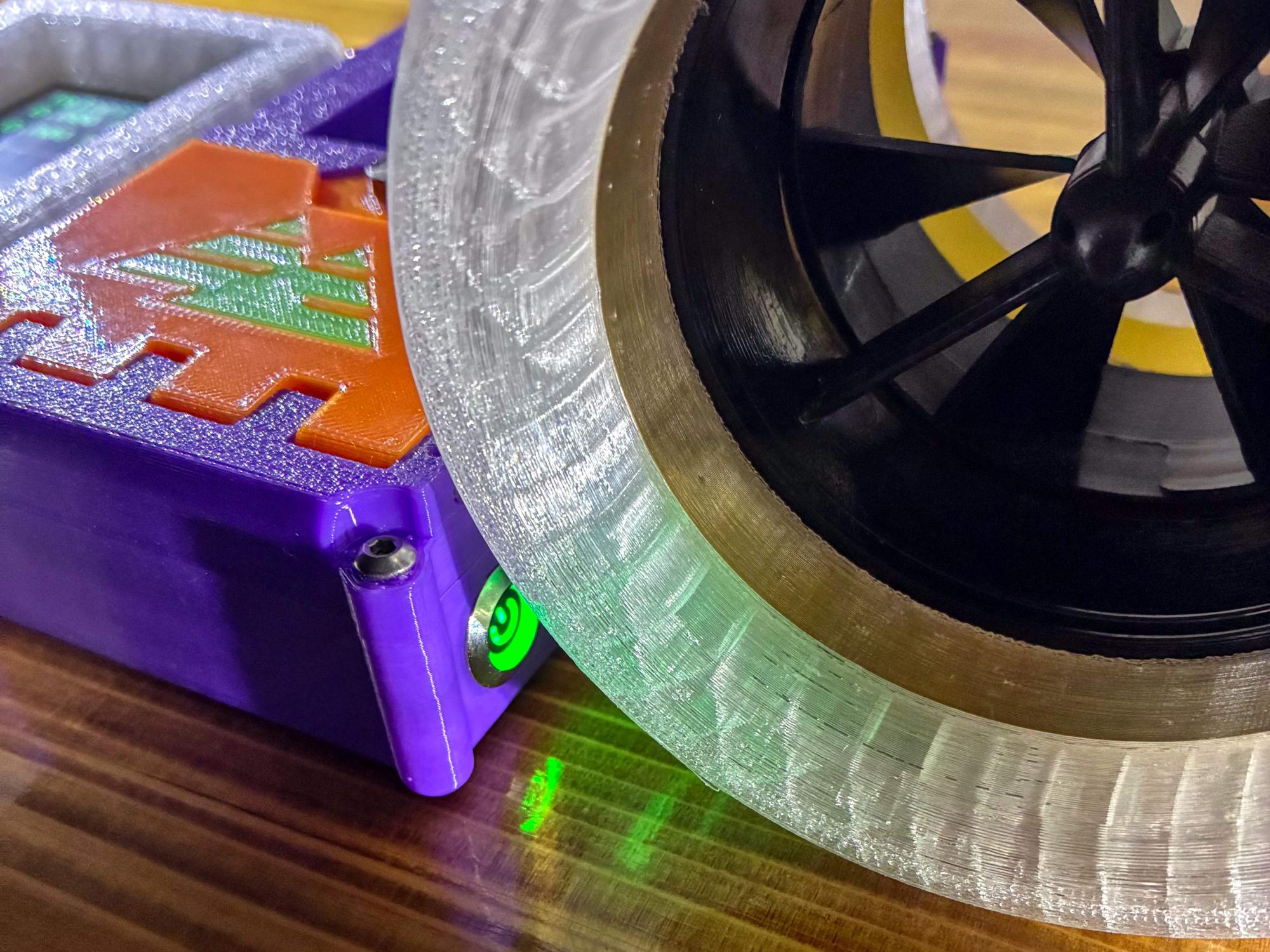
New features:
- Count down timer
- Three decimal places for velocity readings instead of two
- USBC instead of aviation connector - the aviation connector is in many ways more suitable, however in recent years our student groups really struggle with any plugs that are not omni directional. They could not line up the pins, they forgot how to unplug it and tried twisting it round and round braking the cables inside and this was after detailed instructions on how to use the plug. Switching to usbc gives everyone a plug type they understand and can't get wrong.
- Stiffer cable, our V1 unit's most common failure mode was the cable braking inside. We fixed this with a stiffer cable in V2
- Waterproof push button on off switch that can't get switched on by accident.
- Better hydro-dynamics for the sensor by removing the stock c clamp that creates unwanted turbulence, slowing down the prop
- TPU 3D printed weather seals on all joints and ports on the unit, this will not make it fully waterproof, but will allow it to carry on working in the rain and continue working after students drop and recover it quickly from the river.
- Better battery box cover
- Better sensor housing, design and easier maintenance.