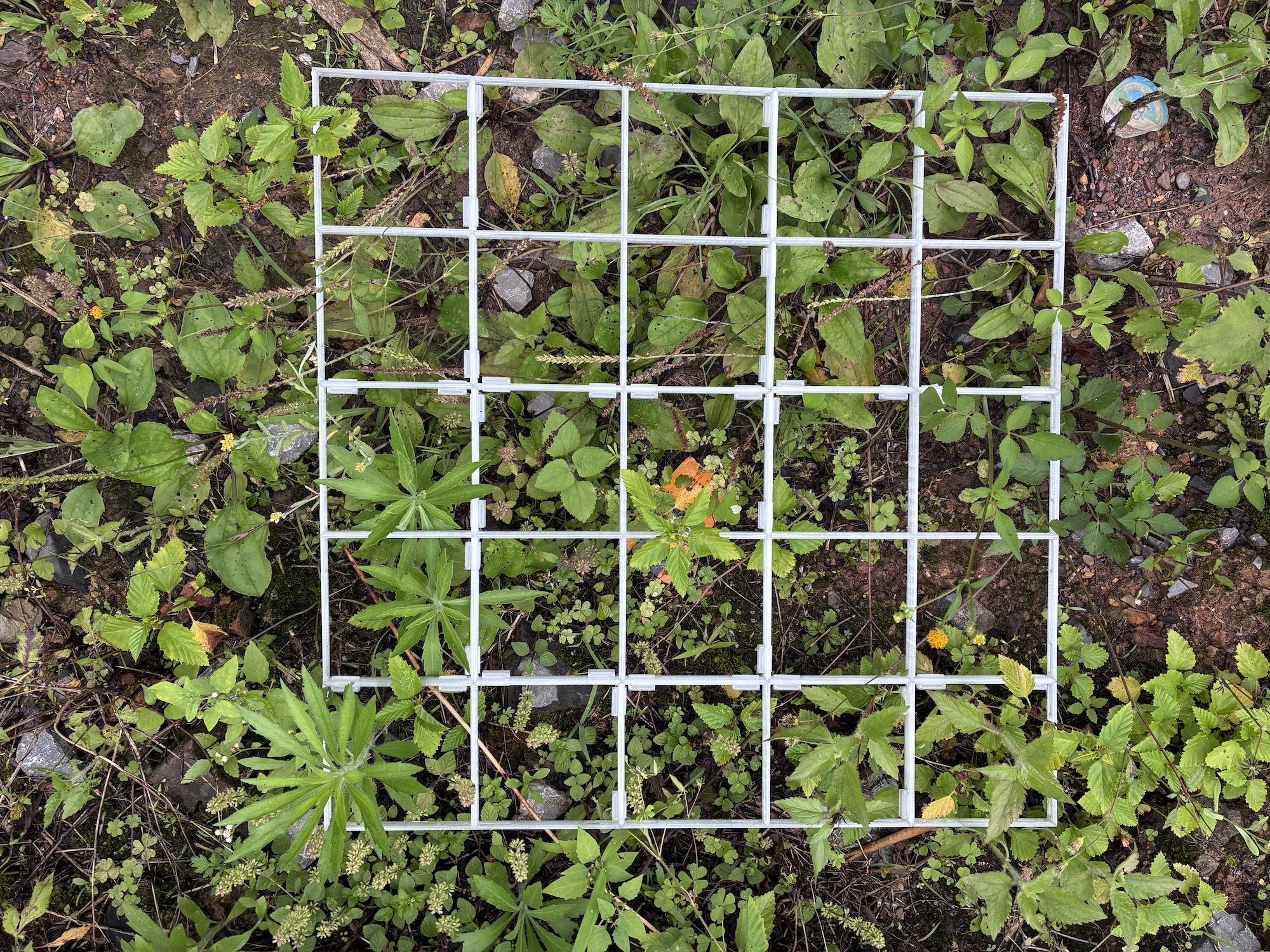
A 3D Printed Quadrat for ESS Fieldwork: Our New Free Resource
Edited 12/05/2026: This worked in the following ways for real world IB ESS fieldwork:
- It was visible enough
- It was accurate enough.
It broke quite literally in strength, the way the students used it, by the afternoon of the first day it started falling apart at the joints where the sections are held together with plastic clips. We will make a version 2 and write an update when that is ready.
Quadrats are used in ecological fieldwork to measuring plant distribution in a forest transect, estimating invertebrate abundance in a grassland, or assessing species richness for an IB Extended Essay.
We've published our own 3D printable quadrat design on Thingiverse (free download including design files). The design was created with ESS and field studies students and teachers in mind.
Why 3D Print a Quadrat?
Commercial quadrats are typically sold as wire frames. They're functional, but not always durable, and replacing them after field trips to remote locations can be costly. A 3D printed quadrat offers a few practical advantages:
Customisable: We uploaded the FreeCAD design files which you can modify your self by downloading FreeCAD from here. You can adjust the frame size for different habitat types, add reinforced corners, or attach additional mounting points for accessories.
Replaceable: If a quadrat gets damaged or lost, you can print a new one.
Lightweight: A printed frame is lighter than metal alternatives.
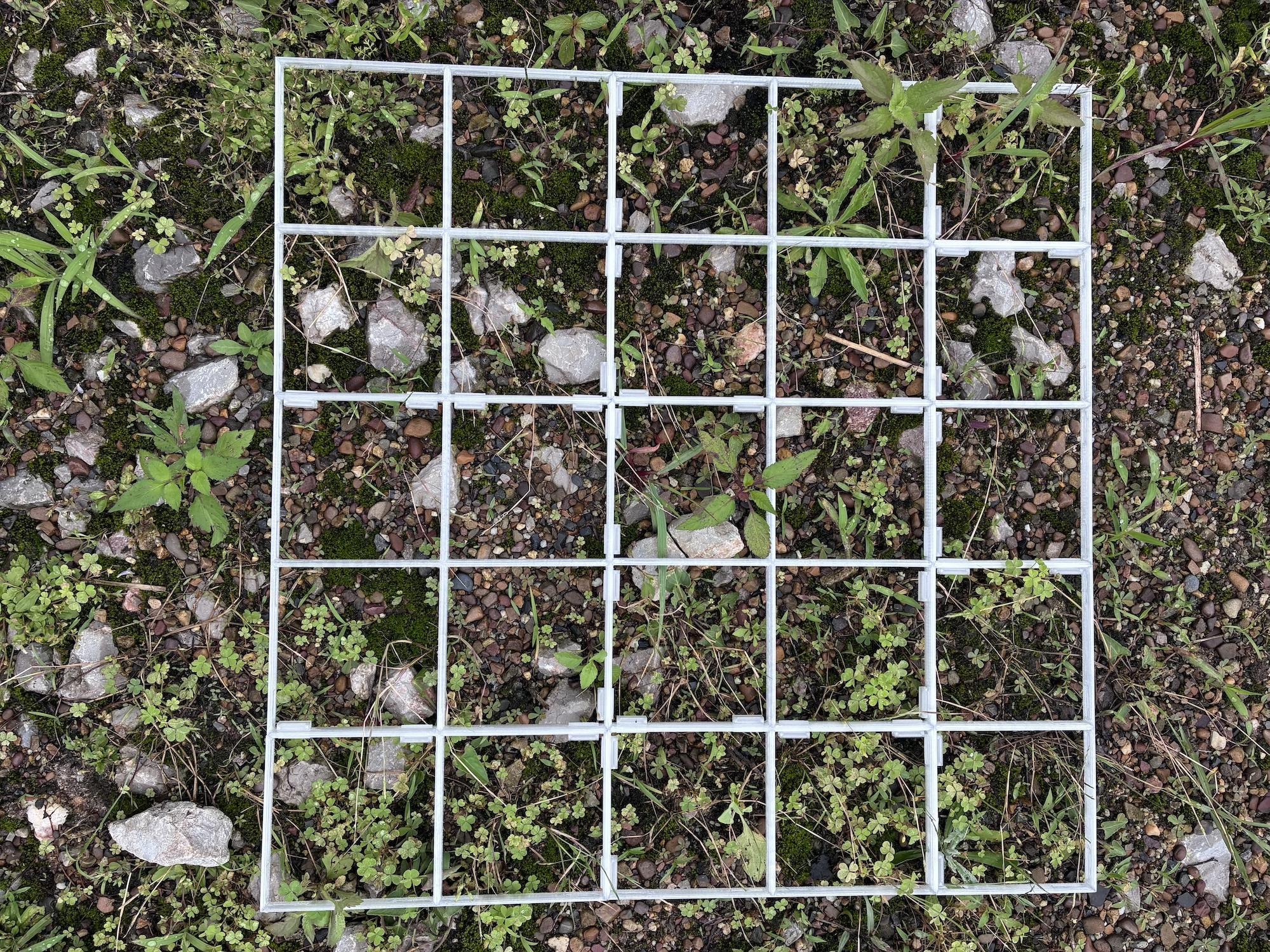
Collapsible: Because its printed in sections with snap together clips you can take it apart for transport.
Logistics for International Schools
For schools in Asia without easy access to outdoor education suppliers, 3D printing opens up possibilities that previously required international shipping and long lead times. If your school has a 3D printer, you can produce as many quadrats as you need for a field trip at minimal cost. The files take up almost no storage space, so you can reprint on demand.
This matters particularly for schools running Microcampus programs or week-without-walls trips where students need to carry all equipment into the field themselves.
Using the Quadrat in ESS
- Quadrats appear in several ESS practical schemes of work:
- Measuring percentage cover of different species within a defined area
- Estimating population density using the Lincoln Index
- Recording changes in vegetation across a gradient
- Assessing impact of abiotic factors on species distribution
The 3D printed frame sits firmly on the ground without sharp edges that could damage vegetation. Students can use the grid markings to systematically sample within the frame, reducing the inconsistency that comes from informal visual estimates.
We recommend printing at 40-60% infill with 3 perimeters for a balance of strength and weight. The design uses standard PETG filament and fits on most desktop 3D printers without supports.
Try It Out The design, licensing and related files are available at here. Download the STL file, slice it for your printer, and print as many as you need.
If your school has a FabLab or maker space, this could be a student project in itself: designing improvements or adaptations for specific habitat types. For teachers planning fieldwork, we also offer field studies programs that incorporate quadrat use alongside other ESS practical techniques. Our teams have run ecological fieldwork in Yangshuo, Hong Kong, and throughout southern China, and we're familiar with the equipment constraints that international schools face. Good fieldwork doesn't require expensive equipment. Sometimes the simplest tools, printed on demand, are all you need.